Nyungwe National Park, Rwanda: Primate Safaris
Nyungwe National Park lies in the far southwest of Rwanda, close to Lake Kivu and straddling the borders with Burundi and the Democratic Republic of Congo. From Kigali, the drive covers roughly 220–230 kilometres and typically takes five to six hours, winding through terraced hills, tea estates, and small trading towns before the road climbs into the forest itself. Travellers short on time can also fly to Kamembe Airport near Rusizi and complete the journey by a shorter road transfer.
The park covers just over 1,000 square kilometers (estimates range from about 970 to 1,019 km², depending on the source and survey year), making it the largest remaining block of montane rainforest in Africa. Its history as a protected area stretches back to 1903, when it was first designated a forest reserve under colonial administration. It was elevated to full national park status in 2004, a move that came alongside heavy investment from the Rwandan government and international conservation partners. That investment has paid off: poaching has been almost entirely eliminated, and surrounding communities have been drawn into conservation through education and, increasingly, tourism revenue-sharing.
Ecology and Biodiversity
Nyungwe’s forest predates the last Ice Age; its long isolation has made it one of Africa’s richest biodiversity hotspots. Perched between 1,600–2,950m, it has a cool, misty climate unlike typical equatorial lowland forests—daytime temps in the low-to-mid 20s°C, nights dropping to 10–12°C. It’s often considered a source region for the Nile, with ridgeline streams feeding the river system.
Primates are the park’s highlight: thirteen species, including chimpanzees, large troops of Angolan colobus monkeys (some numbering in the hundreds), L’Hoest’s monkeys, grey-cheeked mangabeys, vervet and blue monkeys, and the localized Hamlyn’s monkey. Birdlife is equally exceptional—nearly 300 recorded species, many endemic to the Albertine Rift, headlined by the striking great blue turaco with its resonant call.Other residents include servals, mongooses, duikers, and rare leopards, alongside remarkable diversity in orchids, butterflies, and over 200 tree species—making Nyungwe a standout ecological treasure.
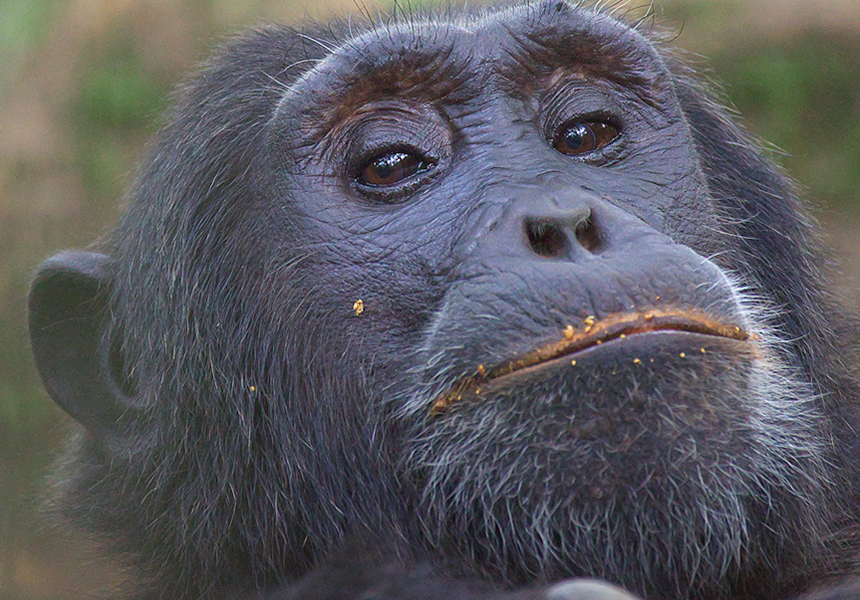
Nyungwe Forest National Park, in southwestern Rwanda, is one of Africa’s oldest montane rainforests and a UNESCO World Heritage Site. The park spans over 1,019 km² and is home to around 500 chimpanzees, 12 other primate species, more than 275 bird species, and hundreds of orchids and rare Albertine Rift endemics. Four days is enough time to do the park’s signature activities at a relaxed pace, with a buffer day for weather or rest.
From $850
Tourist Activities and the Best Time for Each
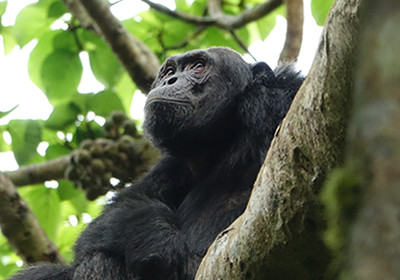
Chimpanzee Trekking is the park’s signature experience. Guided groups depart early morning, sometimes aided by trackers who’ve located the chimps’ overnight nest. Treks run two to six hours depending on chimp movement, with up to an hour of observation once found. Permits cost roughly $90 per person, though sightings aren’t guaranteed given the animals’ wide range. Timing advice varies: dry season (June–September, December–February) offers firmer, safer trails—ideal if pairing trekking with long hikes or the canopy walk. However, wetter months (October–May) may actually improve sighting odds, since abundant fruit keeps chimps concentrated in smaller areas rather than ranging widely as they do when food is scarce. Choose based on priority—comfort versus encounter odds.
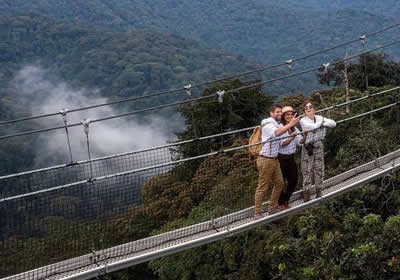
The Canopy Walk is East Africa’s only walkway of its kind—a suspended bridge 50–60 meters high, spanning about 200 meters, forming part of a roughly two-hour round-trip with the approach hike. It provides rare canopy-level views of colobus monkeys and birdlife, though it’s unsuitable for those with serious height fears. Dry season (June–September, December–February) is best here, offering clearer views and safer trails. Early mornings, before mist and crowds arrive, yield calmer visits and better wildlife activity.
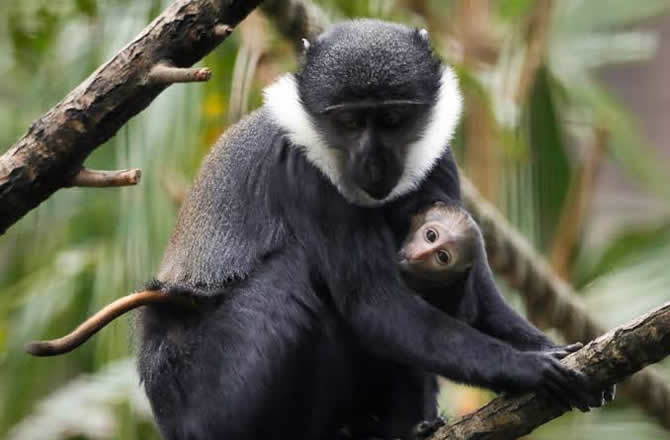
Aside from chimpanzees, Nyungwe offers guided tracking of the Angolan colobus, whose large, cohesive troops make for a spectacular sight as they move through the canopy, as well as L’Hoest’s monkeys and other smaller primates. These outings are generally shorter and less physically demanding than chimp trekking.
Best time: Dry season (June–September, December–February) for easier trail conditions and clearer canopy visibility, though colobus troops are large and relatively easy to find in any season, making this one of the more forgiving activities on the calendar.
Birdwatching Nyungwe hosts nearly 300 recorded bird species, including many Albertine Rift endemics, making even a half-day walk rewarding. Specialist guides who know key calls and territories can be arranged at Uwinka park headquarters. Best time: Unusually, the wet season (roughly October–November and March–May) has an edge here—breeding and migratory activity peak, boosting bird numbers and visibility despite denser vegetation. The dry season still offers strong birding with easier trails and less rain, so serious birders often favor the rains while casual visitors may prefer dry-season comfort.
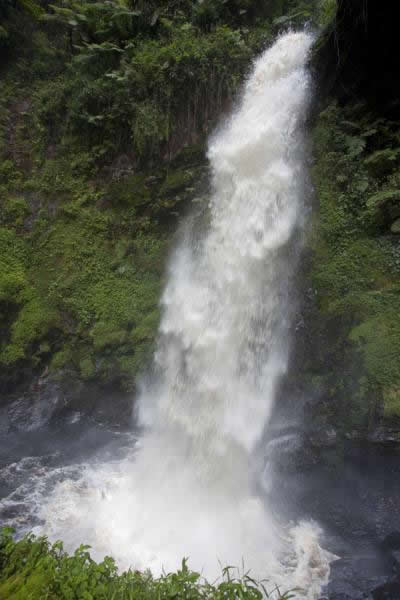
Forest Hiking and Waterfall Trails Over 130 km of maintained trails range from short walks to full-day treks. Highlights include the Igishigishigi boardwalk loop (great for orientation and views), the moderate Isumo waterfall hike, and the Kamiranzovu swamp trail through orchid-rich wetland forest. Trails can be combined or done separately. Best time: Dry season (June–September, December–February) for firmer, safer footing on steep sections. Visitors comfortable with mud may prefer wetter months, when swollen streams make the waterfalls more dramatic.
Cultural Village Visits and Tea Plantation Tours Community-run villages near the park offer dance, crafts, and storytelling, with revenue-sharing supporting local livelihoods. Nearby tea estates offer guided walks or factory visits, set against striking tea-covered hillsides. Best time: Any season—these low-intensity, largely indoor activities are unaffected by weather, making them ideal rest-day pairings, especially during wetter months.
Planning Considerations Nyungwe’s altitude and rainforest setting bring cooler temperatures, frequent mist, and possible rain year-round. Dry months (June–September, December–February) are most popular, offering easier hiking and clearer views, but require advance booking for permits and lodging. Wetter months (March–May, October–November) bring fewer crowds, a lusher forest, and advantages for birding and possibly chimp trekking. Many travelers pair Nyungwe with gorilla trekking in Volcanoes National Park, combining Rwanda’s two flagship primate experiences in one trip.